

In this edition of Reloverse, we explore how international experience reshapes perspective, identity and human understanding. Global Mobility is often discussed through the lens of logistics, immigration, policy and compliance. Yet the personal impact of living and working across cultures runs much deeper. International experience changes how people communicate, lead, adapt and understand the world around them.
Many internationally mobile employees return home changed in ways that are difficult to explain. Their routines may feel familiar again and their language may sound unchanged, yet their perspective has often shifted permanently. Exposure to different societies, working styles and cultural norms can gradually reshape identity, broaden empathy and challenge assumptions people may never have questioned before. For organisations operating internationally, that shift matters more than ever.
Cultural awareness begins with discomfort
Businesses continue building globally connected workforces while asking employees to collaborate across countries, cultures and time zones. Technical expertise remains essential, but the ability to adapt communication styles, understand cultural nuance and build trust across borders is becoming equally valuable. International experience often develops these qualities in ways formal training cannot easily replicate.
One of the most interesting themes explored in Beyond Borders, Beyond Beliefs by Justin Sargent is the idea that many people only become fully aware of their own cultural conditioning after leaving home. Behaviours, assumptions and communication styles that once felt entirely normal suddenly become visible when viewed through a different cultural lens, often through small moments of misunderstanding rather than dramatic conflict.
Communication styles can vary significantly across cultures. What feels direct and efficient in one country may feel abrupt elsewhere. In some societies, hierarchy strongly influences conversation and decision-making while in others openness and challenge are expected. Humour, silence, punctuality and emotional expression can all carry different meanings depending on cultural context. These differences rarely create problems because people are intentionally difficult. More often, they emerge because individuals instinctively interpret situations through the norms they know best. International experience often exposes those hidden assumptions surprisingly quickly.
For globally mobile employees, that process can initially feel uncomfortable. Yet it often becomes one of the most valuable aspects of international living. Exposure to unfamiliar environments encourages greater self-awareness and adaptability over time. People begin recognising that there are multiple ways to communicate, lead, solve problems and build relationships successfully.
The identity shift
Many globally mobile professionals describe a gradual shift in identity over time. The longer people live internationally, the more layered their understanding of home, belonging and culture can become. Familiarity grows in places that once felt foreign, while returning home can sometimes feel unexpectedly unfamiliar.
Internationally mobile employees often spend years adapting to new cultures before realising their own identity has changed too. They may unconsciously switch communication styles between countries, become more sensitive to cultural nuance or feel emotionally connected to multiple places at once. International living can expand perspective while also creating a more complicated relationship with belonging.
Ruth Lockwood, Head of Strategic Sales, Southeast Asia at Santa Fe, currently based in Singapore and having lived and worked across multiple countries across Asia, Australasia, Europe and Africa, reflects “International living changes you gradually. You become more adaptable, more aware of cultural nuance and often more open-minded, but it can also leave you feeling connected to several places at once rather than fully belonging to just one.”
For some employees, repatriation becomes psychologically harder than relocation itself. Returning home is often expected to feel comfortable and straightforward. In reality, many globally experienced employees discover that they no longer see home in quite the same way. Their expectations, habits and worldview may have evolved significantly during time abroad, while friends, colleagues and family members may not fully understand those changes because they are often subtle rather than obvious.
This emotional complexity remains under-discussed within many organisations despite its relevance to assignment success, employee wellbeing and long-term retention. Behind every international assignment is a person adapting not only to a new country, but often to a new understanding of themselves.
Why international experience changes leadership
These experiences help explain why internationally experienced employees frequently bring broader perspective into leadership and collaboration. Exposure to different societies and working cultures can increase adaptability, emotional intelligence and awareness of how differently people communicate and interpret situations.
As Justin Sargent observes in Beyond Borders, Beyond Beliefs, “True cultural understanding starts with recognising those differences.” That observation feels increasingly relevant as organisations continue expanding internationally while managing increasingly diverse workforces. Cultural understanding does not emerge automatically because people travel frequently or work internationally. It develops through exposure, listening, discomfort, curiosity and adaptation. International experience can challenge assumptions people have carried for decades while broadening understanding of how others live, communicate and approach the world.
Employees who have lived and worked internationally often return with broader perspective, stronger adaptability and deeper awareness of cultural complexity. Many organisations already recognise the value internationally experienced employees bring into leadership, collaboration and cross-border decision-making, even if those qualities remain difficult to measure directly.
The organisational opportunity
For HR and Global Mobility professionals, this creates an important opportunity. International assignments can shape leadership capability, cultural intelligence and long-term organisational thinking alongside their operational purpose. This also reinforces why relocation support increasingly includes cultural adaptation, emotional stability and family integration alongside immigration compliance, logistics and housing support. Successful assignments often depend on how confidently employees and their families adapt to unfamiliar environments, build stability within them and develop a genuine sense of belonging during the assignment experience.
As global workforces become increasingly interconnected, the human side of Global Mobility will continue growing in importance. Compliance, immigration and logistics remain essential foundations, yet the organisations that support international employees most effectively are often the ones that understand relocation as a deeply human experience shaped by adaptation, identity and belonging.
At Santa Fe, we support relocating employees and organisations through every stage of the international journey, helping people work, live and thrive in new places around the world through a combination of operational expertise and human understanding.
If you’re looking for a Global Mobility partner that understands both the operational and human side of international relocation, we’d be pleased to continue the conversation. Simply drop an email to reloverse@santaferelo.com and we’ll be in touch.
About Justin Sargent
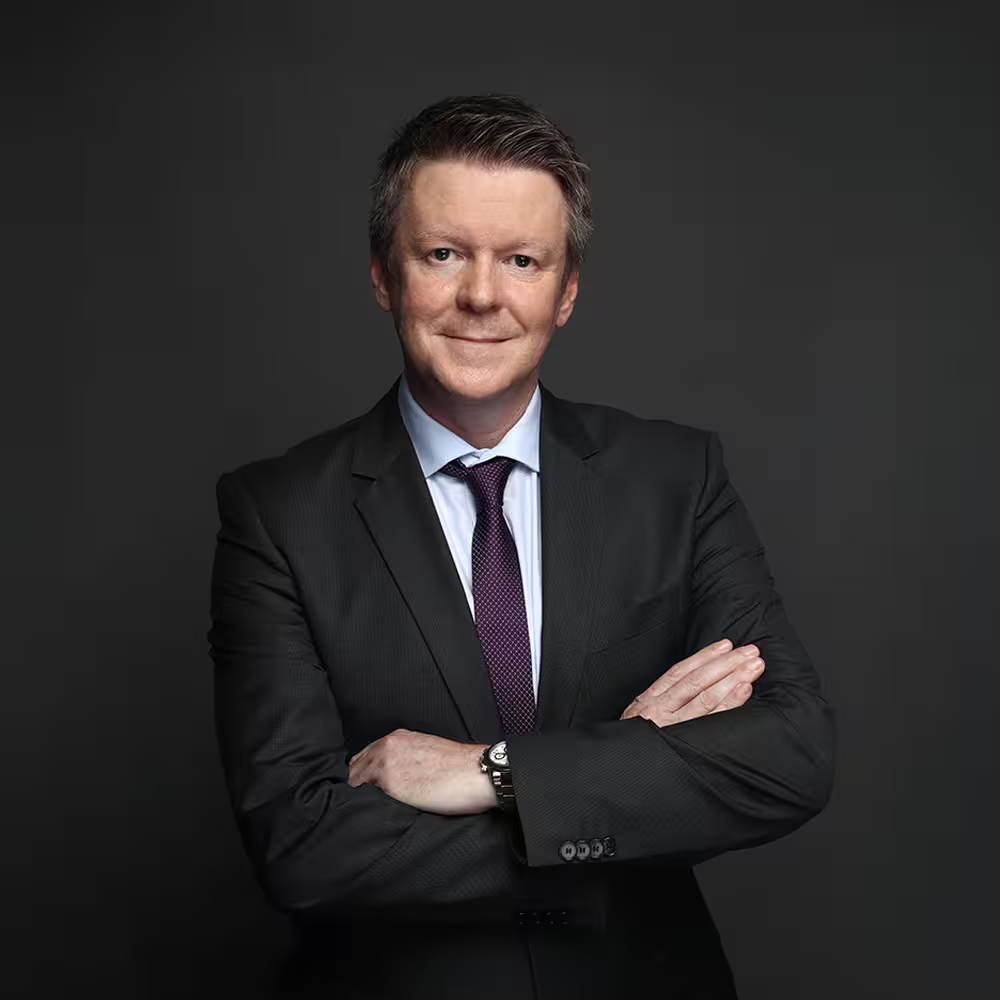
Born in Britain, Justin Sargent now lives in Singapore with his wife Nayana, having worked and lived in many countries around the world including Australia, India, Switzerland and China. Starting his career with Procter & Gamble, Justin held a wide variety of senior international positions with the marketing research giant Nielsen (which became NielsenIQ), including leading their business and team of around 10,000 employees in Asia Pacific and being responsible for the global commercial strategy of the $4Bn enterprise following the company’s merger with GfK.
Justin now runs his own advisory business, consulting and acting as board advisor to a number of emerging and leading data and consumer goods companies around the world.
An avid travel and experience enthusiast, Justin has always been a big believer that culture is critical, and to get the best out of people then you have to first understand, and then adapt. Justin has long wanted to share his learnings from a culture and leadership perspective, and to bring these learnings to life through real-life anecdotes of encounters, challenges and mishaps he has experienced throughout his career.
Beyond Borders, Beyond Beliefs is that story. Available on Amazon worldwide.